
Jane Underwood Poetry Prize
Open to all poets, the Jane Underwood Poetry Prize is awarded for a single poem. The contest will be open to submissions from October 1 – December 1, 2025.



2024 Jane Underwood Poetry Prize Winner and Finalists
Congratulations to 2024 Jane Underwood Poetry Prize Winner, Marian Urquilla! Our finalists are Maisie Kirn, Alex Wong, JoAnna Scandiffio, and Angelica Recierdo.
2025 Contest

Submission Window
October 1 – December 1

Entry Fee
$15

Winner & Finalists Announced
March 2026

Prize
$500 + Publication
Final Judge

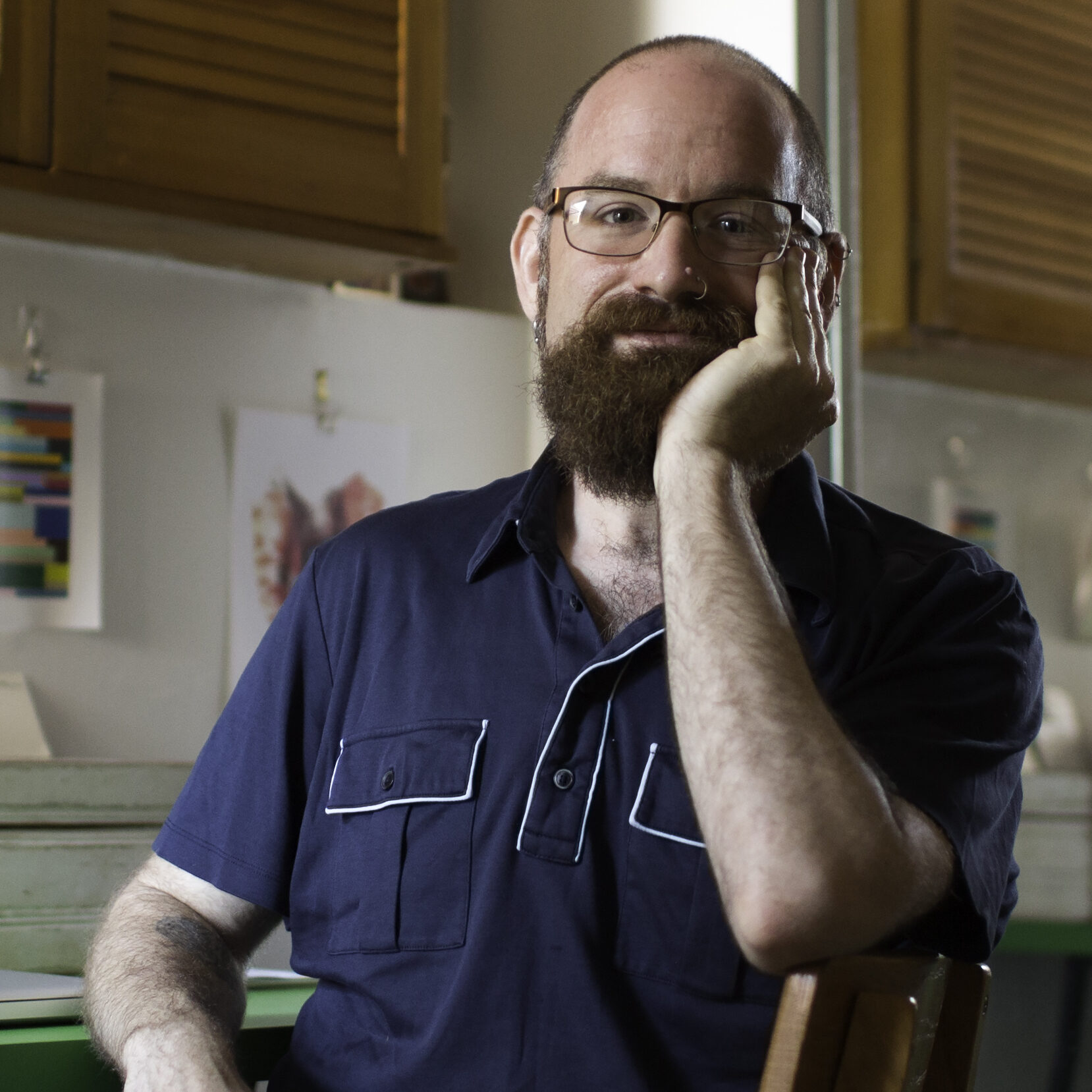
Brian Teare
A 2020 Guggenheim Fellow, Brian Teare is the author of seven critically acclaimed books, including Doomstead Days, winner of the Four Quartets Prize. His most recent publications are a diptych of book-length ekphrastic projects exploring queer abstraction, chronic illness, and collage: the 2022 Nightboat reissue of The Empty Form Goes All the Way to Heaven, and the fall 2023 publication of Poem Bitten by a Man, winner of the William Carlos Williams Award from the Poetry Society of America. After over a decade of teaching and writing in the San Francisco Bay Area, and eight years in Philadelphia, he’s now an Associate Professor of Poetry at the University of Virginia and lives in Charlottesville, where he makes books by hand for his micropress, Albion Books
Poetry’s role in my life is simple: it seems to me the best, most flexible way to address the thousand questions that arise from being alive. Why? I love that it is as much music as logic, as much rhythm as syntax, and I love its essentially dialectical mix of ideal and quotidian, the poetic and anti-poetic, its marriage of heaven and hell, spirit and matter.
Past Awards
-
Winner

Finalists
Molly Thapviwat
Reed Turchi
-
Winner
Finalists
Angelica Recierdo
JoAnna Scandiffio
Maisie Kirn
Alex Wong
Final Judge
Brian Teare
The visionary reach of “Turtle Meditations” sneaks up on the reader. Ranging across scales, from the political to the familial to the individual to the cosmological, each stanza builds upon the last until the poem culminates in a resonant mythic image. Early on, we learn that the speaker’s family, displaced by war, transfers a beloved turtle from garden to garden across generations of exile. We also soon learn that this relationship is not simple. “She is our captive and our friend,” the poet writes, “the way/everything doubles in this tiny country.” After that revelation, the poem moves toward the mysteries intrinsic in such doubleness. When the speaker revisits the family house, “a great sleepiness comes over” them and their “bones fill with rain.” Is this a memory? A dream? When they whisper the turtle’s “red name,” she returns from the dead to lumber “across the muddy yard in cycles of lift /and place, each trudge a ponder,” a resurrection that anticipates the surprising final stanza. When I first read the poem’s closure, I asked myself, “How did we get here?” and went right back to the beginning, which made me realize that this was from the start a cunningly crafted poem about “the fissured world,” always beginning and always ending. And always carried on the bloodied armored back of La Tortuga.
-
Winner

Finalists
Fay Dillof
Julia B. Levine
Melissa McKinstry
Final Judge
Craig Santos Perez
At first, this poem grabbed my attention with its visual elements: two columns that end up connected in the final line. As I dived into the poem, I found the interplay between the two voices of the mother and daughter a perfect complement to the form. The author reveals the narrative through subtle allusions and, at the same time, striking imagery and figurative language. Re-reading the poem multiple times gave me an appreciation of the poem’s layers and musicality. This is a haunting and profound work!
-
Winner
Finalists
Brenda Yeager
Emily Pulfer-Terino
LiAnne Yu
T.S. Leonard
Final Judge
Sharan Strange
“In a womb – a new era – & Kali’s tongue” speaks so poignantly of culturally- (and therefore generationally-) embedded wounding that I feel both unsettled and encouraged by its elegiac meditation, which implicitly challenges foundational beliefs that devalue women and perpetuate their victimization. The poem’s recursive meanderings intrigue me and leave me pondering it long after its suspended, yet hopeful resolution.
-
Winner
Finalists
Aimee Herman
Gregory Thomas
Jeanne Wagner
Final Judge

Vandana Khanna
The level of intimacy and memory in Sydney Vogl’s poem, “All the Bars Are Closing,” reminds us of what we long for, what we’ve left behind, and how some feelings stay with us, mapping our way home.
-
Winner
Finalists
Emily Pulfer-Terino
Lizabeth Yandel
Tony Barnstone
Twila Newey
Final Judge

David Hernandez
I’m not gonna lie: it wasn’t easy to pin one blue ribbon on a poem. But after reading and rereading and ruminating my top 5 for a few days now, I’m confident about my decision.
-
Winner

Finalists
Grace Li
Heather Campbell
Sharon Coleman
Final Judge

Rick Barot
Given the violent dread that now seems inextricable from the everyday, “Armistice” feels like a complex reprieve. In imagining a kind of cessation, the poem enacts a momentary healing. This is perhaps the most that—beautifully, necessarily—we can hope from poetry now.
-
Winner
Finalists
Charlotte O’Brien
Phillip Provance
Rogan Kelly
Sarah HaBa
Valentina Gnup
Final Judge

Arisa White
“When the women imagine their mothers in death” was so striking. It stayed with me for days.
-
Winner
Finalists
Catherine Hodges
Grace Grafton
Julie Paegle
Rayne O’Brian
Robert Eastwood
Final Judge

Julie Bruck, Alison Luterman, and Kathleen McClung
We are delighted to award the Jane Underwood Prize to “When I Hear ‘Horses’ as ‘Corsets.’” All three of us really admire the artistry of this poem.

